By Emily Gonzalez
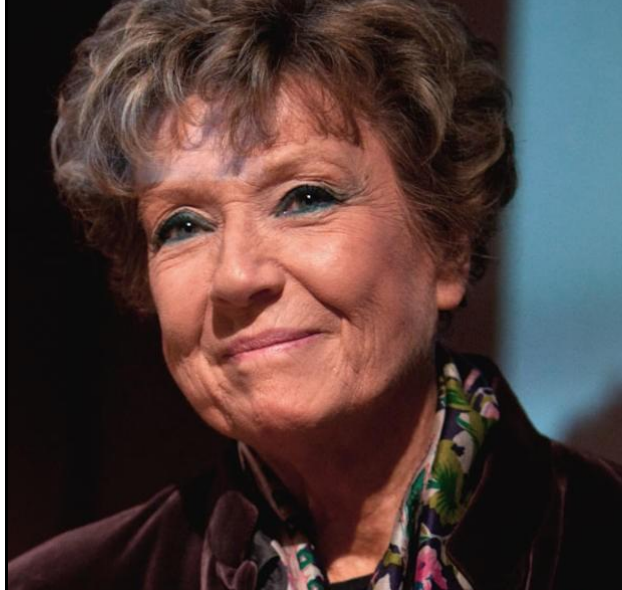
I attended the talk with the Italian writer Darci Marini. Darci Marini is one of Italy’s most contemporary writers, whose writing ranges from narratives, poems, essays, and plays. The reason I attended was because it was a requirement for my Italian cinema class. Throughout the semester, in my Italian Cinema class, we have been discussing and analyzing her work, and the chance to speak live was so exciting to me.
When she was asked why she writes, She responded, “I don’t know why I write.”
She went on to say that she had come from a line of writers. She discussed how, when she was in a Japanese concentration camp from 7-9, although they were in prison, her father continued to educate her. A thing that stuck out to me was when she expressed how hard it is for poetry to translate into another language, which often causes it to lose its original value and desired impact. As a Spanish speaker, I can personally relate to this. There are some phrases that don’t make sense in English, and the translation causes the phrase to lose its original meaning. In her writing, Darci Marini explores problems within Italian society and the effects of them.
Later on in the talk, she expresses how she has witnessed a rise in femicide. In her discussion of femicide, she explained that when men think they love a woman, they believe that they belong to him. She made an interesting comparison between the fact that crime and killing are going down, but femicide is increasing at an alarming rate. What I thought was really interesting was how she presented the idea that because society has constructed men to be the guide, when a woman wants to be more independent, men lose themselves. They often lose their heads when they lose a part of their identity, which is to lead and guide, which causes them to commit femicide. And I thought one of the saddest parts about this is that after they commit these horrendous crimes against women, they kill themselves because they are terrified of not being in control of their identity. I thought this was extremely interesting because I had never really thought about femicide in this way.
Another point she brought up was that it was really interesting how we are born into a world where our role in society is already scripted and that when women are around 2 years old, society decides their role. She told a story about how she was looking for a gift for a little girl and went to the equivalent of Toys R Us when she saw the very difference between the variety of toys. She observed that the girl side had various types of baby dolls, a kitchen set, and a Barbie, whereas the boy section featured airplanes, trains, and guns. Since the beginning of time, society has created a role-playing society in which women’s role is to have children, take care of the children, and clean the house. She expressed that, in contrast, the creation of Barbie has broken the mold in which women are placed, with a doll that has over 250 careers and features new places for women in society.
She discusses how she founded the feminist theater company called La Madgland in Rome. When she was asked if she believed in the power of theater, she expressed, “Yes, I learned how people change with theater.” I personally could relate to this because, after doing the artform of theater for 4 years, I have watched and experienced how audience members react or leave a performance. Since the time of the Greeks, plays were meant to make their inhabitants feel catharsis, in which they would express their pent-up emotions. I know it sounds corny, but every time I see a piece of theater, I feel like a new person.
Overall, I absolutely loved this talkback and the ideas expressed by Darci Marini. She is an absolutely wonderful writer and a wise woman. I was able to ask her a question about time, and we had a brief conversation about time and how time will forever mean something different for each other.